Do you remember the British Cycling team before 2003? They were average until Dave Brailsford came along. He introduced the idea of marginal gains. By making small improvements, like better bike maintenance and even pillowcases, they became world champions.
This story is more than just sports. It’s a lesson in systems thinking. It shows us how to build a reliable race bike. It’s not about one fast part. It’s about making small improvements all over the bike.
Imagine a finicky electronic groupset like a demanding opera singer. It’s great when everything goes right, but it can fail dramatically. On the other hand, a mechanical groupset is like a steady butler. It may not get all the attention, but it never lets you down.
In long races, the winner isn’t always the fastest. It’s the bike that keeps going when others stop. This is the reliable race bike way: a steady butler beats a dozen divas. Winning is about lasting longer, not being the fastest.
Parts that commonly fail
Every DNF (Did Not Finish) has a story. It starts with a sound—a ping, a clunk, a hiss where there should be silence. The dream of a reliable race bike often ends not in a dramatic crash, but in the slow, predictable failure of a $10 part. The most common failures aren’t random; they’re a predictable consequence of physics, material science, and the relentless demand we place on our machines. Let’s dissect the usual suspects.
Your tires and wheels are the first and most critical point of failure. Choosing the wrong wheel size or tire for your terrain is a strategic blunder. Data on wheel and tire selection is clear: the wrong choice doesn’t just slow you down, it can stop you dead. A guide to choosing a racing bike emphasizes that a 700c wheel with a 28mm tire is a common road standard, but a 650b wheel with a wider tire might be the reliable choice for mixed surfaces. The choice between tubeless and clincher isn’t just about weight; it’s a gamble on reliability. A tubeless setup can seal a small puncture, but a clincher blowout can be catastrophic. The wrong pressure for your tire width can lead to a blowout or a pinch flat, turning a podium finish into a long walk home.
The table below outlines the trade-offs in wheel and tire selection, a critical choice for building a reliable race bike:
| Wheel Size & Type | Common Tire Width | Use Case & Failure Risk | Reliability Quotient |
|---|---|---|---|
| 700c x 25-28mm (Clincher) | 25-28mm | Road racing, tarmac only. High risk of pinch flats on rough terrain. | Medium. Fast, but vulnerable to road debris. |
| 700c x 32-38mm (Tubeless) | 32-38mm | Gravel/All-Road. Lower pressure, better grip, self-sealing against small punctures. | High. Forgiving and durable for mixed surfaces. |
| 650b x 47mm (Tubeless) | 47mm+ | Gravel/Adventure. High volume for comfort, low pressure for grip. Puncture risk is lower, but sidewall cuts are catastrophic. | High for comfort, medium for sidewall integrity. |
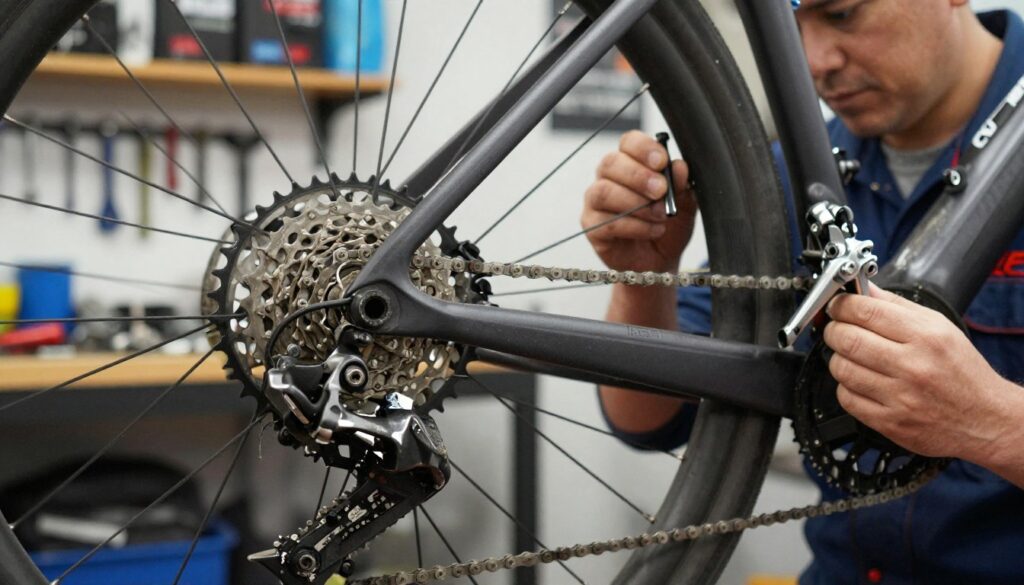
Beyond the rubber meeting the road, the drivetrain is a symphony of wear. Chains, cassettes, and chainrings are consumable items. A worn chain, often overlooked, is the most common cause of drivetrain failure. It doesn’t just skip; it acts like a file, grinding down the teeth of your cassette and chainrings. Replacing a $40 chain is cheap preventative maintenance. Ignoring it leads to a $400 bill for a new cassette, chainrings, and a chain—a classic case of a small failure cascading into system-wide collapse. This is a core principle of a safety-critical component philosophy, where every part, no matter how small, is a link in the chain of reliability.
Then there are the spokes and wheel integrity. A single broken spoke can seem minor, but it’s a stress fracture in your wheel’s structure. In a high-tension wheel, a single spoke failure redistributes its load to its neighbors, starting a cascade that can fold a wheel in a hard corner. The failure is rarely just a “broken spoke”; it’s a total wheel collapse waiting for the right pothole.
Ultimately, a reliable race bike isn’t about a single invincible component. It’s a system. Choosing the right wheel and tire combo for the terrain is your first defense. Maintaining your chain and cassette like a ritual is your second. Inspecting for stress and wear is your third. The forgiving bike isn’t the one that never breaks; it’s the one whose failures are predictable, manageable, and planned for. The alternative is a DNF that could have been avoided by listening to the subtle warnings—the hum of a worn bearing, the slight click in the bottom bracket, the slow leak in a tire that was a hero 500 miles ago. The reliable race bike is the one whose failure points are known, monitored, and managed, not a mystery waiting to unravel at mile 80.
When to replace instead of tune
The most reliable race bike isn’t about being light. It’s about knowing when to replace parts. This is the art of endurance cycling: knowing when a part is no longer reliable. It’s a decision made at high speed, where every second counts.
Think about the philosophy of marginal gains. That drivetrain you’ve used for years has a limit. A chain with 3,000 miles is not just worn; it’s dangerous. The decision to repair or replace often depends on this: is a new chain worth the risk of failure?
Tires are a great example. Thin, high-performance tires might be faster. But a wider, more durable tire might keep you safe when the other leaves you stranded. The key is choosing the most dependable option.
Every part of your bike has a similar story. Headset bearings that wobble need replacing, not tuning. Brake pads that are almost gone are done. The cost of replacing parts is less than the risk of failure.
A reliable race bike is a system, not just parts. It’s about making smart decisions. A $50 chain is cheaper than a $400 wheel repair. Your reliable race bike is built on these small, smart choices.
A reliable race bike is a philosophy. It’s about upgrading wisely, like getting a new chain and cassette before a big race. Sometimes, the best upgrade is a fresh start.
Redundancy planning
In endurance racing, victory often comes down to small details. A frayed cable fixed with electrical tape can make all the difference. The most reliable race bike isn’t about being light. It’s about having backup systems thoughtfully designed.
This isn’t about being paranoid. It’s about understanding physics and risk. True reliability means a system without single points of failure.
The British Cycling team’s focus on detail is legendary. Their white-painted vans were more than just clean. They were a way to spot tiny debris that could cause failure. This was a risk-mitigation strategy against dust.
This mindset applies to your reliable race bike. It’s not about having a spare bike. It’s about smart, strategic redundancy. Having a spare tube, a tubeless plug kit, and a patch kit is key.
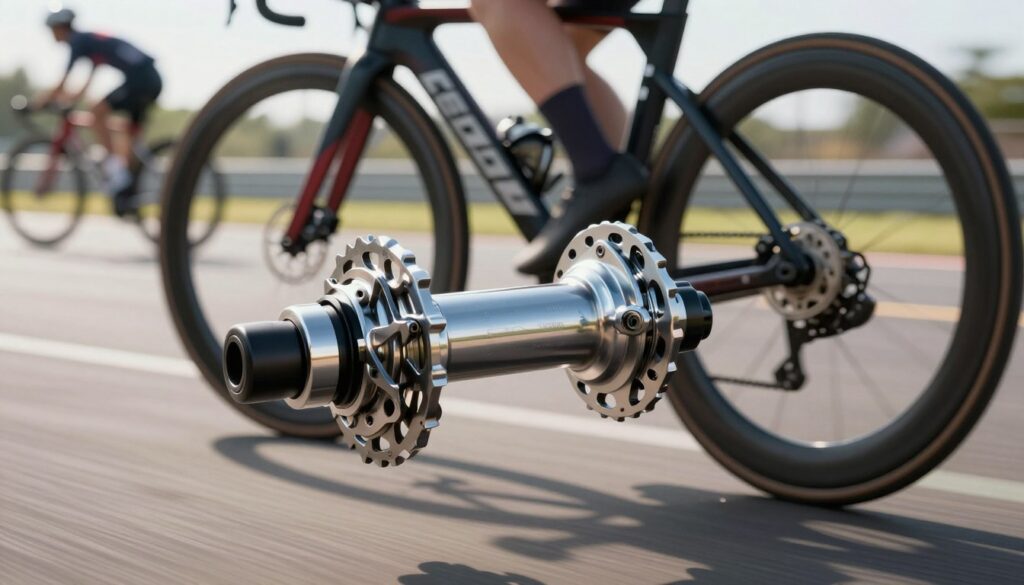
A dynamo hub is a symbol of self-sufficiency. While others rely on power banks, a reliable race bike with a dynamo hub generates its own power. It’s a self-contained system, independent of external grids.
This table shows how a basic kit can become a redundant system:
| Component | Basic Setup (Single Point of Failure) | Redundant System (Race-Ready) |
|---|---|---|
| Puncture Repair | One spare tube, one CO2 cartridge. | Tubeless sealant, 2x spare tubes, patch kit, 2x CO2, mini-pump, and tire boot material. |
| Tools | One multi-tool with a 4mm and 5mm hex. | Dedicated multi-tool, plus a mini ratchet set. Duplicate critical tools (e.g., two chain breakers). |
| Power | GPS and lights powered by one large power bank. | Dynamo hub charging a cache battery, which powers devices. Hub powers lights directly, independent of battery. |
| Critical Fasteners | No spares; rely on on-route support. | Zip ties, duct tape, hose clamps, and a spare derailleur hanger (the most commonly broken part). |
For seasoned racers, the checklist is second nature. It’s a mental map of the bike. “Brake pads, chain, derailleur hanger, sealant levels, battery levels, spare cleat bolts.” This isn’t anxiety; it’s control.
Redundancy isn’t about fear. It’s about confidence. When the sun sets, your lights stay on. When the road gets rough, your spare hanger keeps you shifting. You have a reliable race bike system, where every failure has a backup. The only single point of failure is the rider, and you’ve trained for that.
Long-term maintenance strategy
Think of your reliable race bike as a complex system. The whole is more than the sum of its parts. Winning isn’t just in the sprint; it’s in the thousands of pedal strokes before.
This is the long game. It’s about the 1% improvements that add up. These small gains make a bike truly reliable.
Our strategy isn’t about last-minute fixes. It’s about the ritual of maintenance. Choosing the Continental GP5000 tire for its durability is key, not just speed.
Logging every ride and adjustment helps predict failure. A simple maintenance chart becomes your tactical playbook. It turns routine checks into strategic advantages.
This ritual is like the wisdom of a pit crew chief. It’s knowing a well-maintained bike isn’t just faster—it’s a way of life. The race isn’t just won on the asphalt. It’s won in the workshop, with precision and a data-driven plan.