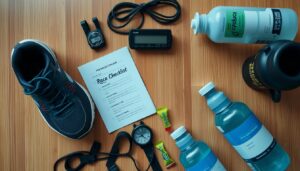
Ever tried figuring out race logistics when you’re tired? Imagine looking at a Google Maps ETA like it’s a Chernobyl reactor readout – “3.6 hours of driving, not great, not terrible”. That’s what Vanaerobic’s team felt during the Sea Otter Classic scramble. Their “bulletproof” travel plan fell apart quickly, like a $5 bike chain.
Forum user Brennus said it best: “I once spent 45 minutes researching Mongolian throat singing instead of booking hotels – cultural enrichment counts as carb loading, right?” His story shows our main point: Today’s athletes need spreadsheet analytics and survival instincts equally. It’s not just about getting there; it’s about being ready to win.
Jet lag racing has its own math. Losing two hours to time zones means losing 12% of your REM cycle. Cutting sleep for racing can cost you a podium spot. Treating sleep like watts is key.
So, how do you mix data-driven prep with last-minute chaos? It’s like defusing a bomb while reciting Shakespeare. The clock’s ticking, but style points matter. Travel hacks are your Swiss Army knife: compression socks, blue-light blockers, and a pre-race playlist.
Ready to turn travel into a secret weapon? Let’s explore the numbers and the nonsense that make champions. Spreadsheets or survival instincts? Why not both?
Planning for Time Zones & Jet Lag
Crossing time zones for racing is more than just moving from one place to another. It’s a battle with your body’s internal clock. You might feel like Danny Ocean, trying to keep everything in sync, or like George Clooney in Up in the Air, dealing with expired lounge passes. How you handle this can make a big difference in your performance.
Circadian Rhythm Chess
There are two main approaches: staying in your hotel room or going for early morning runs. But the best strategy is to find a balance. Think of your body’s clock as a chess game. You need to win it over time, not in one move.
BCM suggests adjusting your sleep by 45 minutes every few days before traveling. This is a gentle way to adjust to the new time zone. Red-eye flights can be okay if you use noise-canceling headphones and an eye mask. Melatonin can help too.
The 3AM Gambit
Arriving at 3 AM local time can actually help you adjust faster. This is where minimize jet lag strategies get clever. Expose yourself to daylight right away, even if you’re tired. This helps your body adjust faster than caffeine can.
Drinking plenty of water is also key. Dehydration makes jet lag worse, like a bad karaoke performance.
| Strategy | Forum Fanatics | Sleep Science |
|---|---|---|
| Pre-Adjustment | “Just power through!” | Gradual 45-min shifts |
| Flight Timing | “Red-eyes build character” | Land by 2 PM local |
| Recovery | Espresso shots | 20-min naps + electrolytes |
Red-eyes can be okay for small time zone changes. But for big ones, like six hours, it’s a different story. Plan well, or you might struggle at mile 18.
Packing Race-Day Essentials
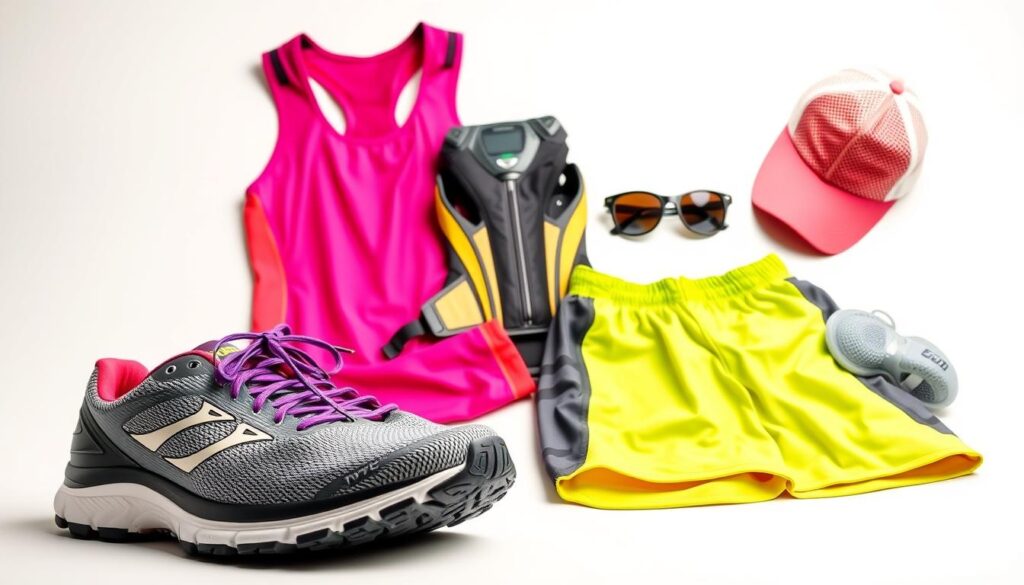
Think of your luggage as a box of racing possibilities. It’s full of everything you need, but also nothing at all. It’s a puzzle where every small space could be key to winning or losing.
The TSA Paradox
Going through airport security with race gear is like playing chess against a tough opponent. ChefAcB suggests packing everything the night before. This turns your carry-on into a clever space-saving system.
Compression sleeves can charge your phone, and race belts can hold cash. Even a rice roll can be a secret carb boost, thanks to ultrarunner smlring.
- Pro tip: Freeze your electrolyte bottles to slip through liquid restrictions
- TSA-proof your kit: Use clear bags labeled “medical supplies” for questionable items
- The golden ratio: 60% nutrition, 30% gear, 10% irrational security blankets
Weight vs. Worth Calculus
KorbenDallas’ epic runs from Phoenix to Vegas show the value of smart packing. He only takes what’s essential, cutting out anything that’s just for comfort.
| Item | Weight (oz) | Race Impact | TSA Risk |
|---|---|---|---|
| GPS Watch | 2.1 | Critical | Low |
| Extra Shoes | 24.3 | Questionable | High |
| Custom Insoles | 3.8 | Essential | Medium |
| Lucky Socks | 1.5 | Psychological | None |
Your gear list shouldn’t be too long. If it’s longer than your training plan, it’s time to simplify. Every ounce you save is energy you can use, unless you’re choosing looks over function.
Sticking to Nutrition & Training
Fueling for competition is like a battle against your body. Think of your body as a high-tech race car. The right fuel can make you win, or you might crash at Mile 23.
Highway to Carbo-Load
Kevinstraining starts his day at 4:37 AM. But traveling across time zones messes up carb-loading. It’s like a game of metabolic Tetris with limited resources.
Hotel breakfasts can be tricky. Avoid the “artisanal” jerky, which is mostly salt. Treat rest stop food like enemy territory.
Motel Room Metabolic Math
People argue about when to drink caffeine like scientists. Here’s what you need to know:
- Peak caffeine hits 45-90 minutes after drinking (so time your coffee right)
- Smlring’s hydration trick: 5oz every 20 minutes, adjusted for humidity and regret
- Convenience store snacks are $1.99 bad choices with 37g of regret
Why do mini-marts become sports nutrition centers? Can you figure out glycemic index while fighting with a vending machine? Your race-day plans didn’t count on this kind of trouble.
Managing Stress and Distractions
Ever felt like your pre-race jitters have their own boarding pass? Welcome to the cortisol carnival of competitive travel. Most runners focus on split times, but the real pros start their mental prep at airport security. We’ll explore how to keep your nerves calm despite time zones and hotel pillows.

Cortisol Curve Negotiations
Stress management is like Formula 1 telemetry for your endocrine system. Elite racers manage cortisol spikes like Wall Street traders. DingleTower’s Sea Otter Classic critique is spot on: “Race mornings don’t need Naval Academy time management?”
Here are three rules for managing your biochemicals:
- Airport sushi is not a pre-race power food (your gut microbiome agrees)
- Practice strategic caffeine deployment like a Navy SEAL planning extraction routes
- Treat TSA lines as mindfulness meditation with better people-watching
The Unfamiliar Bed Paradox
Vanaerobic’s sleep study shows even five-star mattresses can be tough when racing away from home. Your body pillow doesn’t fit in carry-on? Time to channel MacGyver.
Here are some bed-hacking strategies:
- Use race bibs as temporary blackout curtains
- Stack hotel towels into makeshift leg elevation systems
- White noise apps > questionable bedside alarm clocks
Remember, injury prevention for racers isn’t just about foam rollers. It’s about outsmarting circadian mutiny and pillow fort engineering. Because nothing says “race-ready” like duct-taping a travel clock to the nightstand.
Pre-Race Recon and Logistics
Getting ready for a race is like solving a puzzle with nature and Murphy’s Law. Your phone is full of tools, but are you using them wisely? It’s all about keeping your game tight.
Asphalt Anthropology
Rob Krider’s advice is simple: “pass where others hesitate”. This is true for traveling to races too. I saw a triathlete waste 23 minutes in a Tucson garage because they didn’t plan well.
Your Strava heatmap is more than just your fitness. It’s like a spy’s satellite view. Use it to plan your race day:
- Local traffic patterns (think school zones, not just rush hour)
- Venue construction updates (the true final boss of race day)
- Weather-modeled wardrobe choices (because chafing is treason)
Parking Lot Probability
Does your race day plan have as many backup plans as a SpaceX launch? Mine does. Here are three must-do’s for analyzing racing performance before the start:
- Scout alternate routes using police scanner apps – construction crews are sleep-deprived saboteurs
- Calculate porta-potty migration patterns using crowd-sourced race reports
- Pack a “red zone” kit with instant coffee and telescoping selfie sticks for elevation recon
The real pacing strategies start at baggage check. I’ve seen more races lost to parking anxiety than glycogen depletion. Remember, your corral position is useless if you’re stuck in traffic.
Travel Stories from Top Racers
Medieval pilgrimages and modern race travel share common themes. Both involve questionable lodging, existential dread, and the idea that America’s highways are our new cathedrals. Let’s explore the journeys of endurance athletes who turn continental crossings into performance art.
Asphalt Odysseys
Ultra-runner KorbenDallas views I-10 as his personal treadmill, driving 14 times a year from Phoenix to SoCal. His secret? “Interstate interval training” – mixing gas station espresso with dynamic stretching at rest stops. ChefAcB, on the other hand, races 23 times in 14 states using Amtrak points and a collapsible bike.
Their packing strategies are the real travel hack:
| Racer | Vehicle | Essential Item | Mileage Ritual |
|---|---|---|---|
| KorbenDallas | Hybrid SUV | Portable Normatec boots | Every 90 minutes: Hip mobility drills |
| ChefAcB | Train + Rideshare | Custom bike case | Post-arrival: 20-min meditation |
| Shanew50273 | Family Camper | Soundproof partition | Kids’ bedtime = Recovery shake |
Motel Chronicles
Shanew50273’s team vs. solo training finds its peak in his Idaho-to-Colorado sprints. The family camper is their mobile HQ. Kids do math with elevation charts while his spouse drives. “It’s either bonding or mutiny,” he jokes. “But at least we’re not paying for Disneyland.”
Compare this to KorbenDallas’ solo mental marathons:
- 3 AM departures to beat Phoenix traffic
- Audio books and race strategy podcasts
- A strict traveling to races rule: “No fast food west of Tucson”
Which approach is better? It depends on your preference for toddler singalongs or the void of West Texas mesas. When did seeing America become racing America? Our athletes are writing that story – one motel waffle at a time.
Go-To Recovery Tips
Recovering after a race is like solving a crime. Your body is a crime scene, and the foam roller is a tool for gathering evidence. Top athletes treat recovery like a detailed investigation, following strict hydration and nutrition plans.
Asphalt Aftercare
Post-race joy often fades quickly. smlring’s recovery plan is as detailed as a NASA mission checklist:
- 0-15 minutes: Drink electrolyte-rich drinks fast
- 15-30 minutes: Wear compression socks like ballet shoes
- 30-60 minutes: Eat protein on a strict schedule
KorbenDallas’ recovery results are as unpredictable as the weather. Skipping these steps can weaken your body like a deflated balloon.
| Recovery Method | Effectiveness | Science Rating |
|---|---|---|
| Ice Baths | Shock therapy for muscles | ❄️❄️❄️ |
| Compression Gear | Bloodflow turbocharge | 💨💨💨💨 |
| Foam Rolling | Controlled damage assessment | 🔍🔍🔍🔍🔍 |
The Rehydration Equation
Drinking water alone isn’t enough. You need electrolytes to keep your body running. The formula is simple: (sweat liters × 1.5) + (regret ÷ 2) = how much fluid you need. Traveling to races makes this math harder, like a complex movie plot.
Top athletes carefully mix their recovery drinks. If your urine isn’t like lemonade by hour three, you’re not drinking enough.
Conclusion
Today’s racers trade in pit crews for packing cubes. They are nomadic tacticians, using spreadsheets and early morning alarms to win. That 3am math? It’s all about mastering jet lag.
We’ve moved from carb-loading to loading up on culture. Race packet archaeology shows us more than any photo can.
Smlring’s “not great, not terrible” saying is our travel guide. Time zones are puzzles to solve. Airport sushi becomes our race prep protein.
We’re the ones debating electrolyte ratios and Uber prices. We turn logistical messes into personal records.
The real victory is when we hit the track. Did you figure out the parking grid? Master the merch table math? Your next record isn’t just about speed.
It’s about the rental car upgrades and hotel curtains too. So, keep those boarding passes as your training logs. They’re key to reaching new heights.