Choosing a top-notch bike isn’t just about picking the shiniest one. It’s about understanding the language of cycling. You need to know about aero tubes and geometry charts. These things promise speed and performance.
Don’t get fooled by fancy marketing. I’ve seen many riders confuse price with quality. It’s not about how much it costs, but how well it performs.
The Specialized Tarmac SL8 is like the Ferrari of bikes. It’s a top choice for serious riders. But, Trek’s Émonda can make you a local hero. It’s light and fast, perfect for racing.
Carbon fiber is key for a light and strong bike. It makes a big difference in how you ride. Aluminum bikes are durable and reliable, great for everyday use.
Are you racing for glory or just keeping up? Finding the right bike is about more than spending money. It’s about getting a bike that makes you feel like a champion. Let’s look at why some bikes are for pros and others are for you.
Understanding Racing Bike Categories
Choosing a racing bike isn’t just about matching your Lycra. It’s like picking between a scalpel, a machete, and a lightsaber. Each tool has its own use. Let’s look at why a local triathlete wouldn’t mix their road bike with a track beast. And why gravel riders are like the hipsters of cycling, always talking about their unique tire pressure.
Road Bikes: The Pavement Predators
These bikes are like the “main character” bikes. They’re made for speed on smooth roads. They’re the Ferraris of two wheels. Key features include:
- Drop handlebars for aerodynamic tucks during sprints
- Thin, high-pressure tires (25-28mm) that hate potholes
- Groupsets that focus on gear range over strength
Trek’s Domane series shows road bikes aren’t just for Tour de France wannabes. They have pro bike gear with tech to dampen vibrations for us regular folks who hit unexpected gravel.
Mountain Bikes: The Dirt Diplomats
If road bikes are Ferraris, mountain bikes are the Jeeps. They have suspension that could survive a zombie apocalypse. Key features include:
- Flat handlebars for ninja-like control on descents
- 2.2-2.5” tires with tread patterns that laugh at mud
- Disc brakes (hydraulic, because mechanical is so 2015)
Using aero bars on mountain bikes is like wearing stilettos to a mud-wrestling match. It’s possible, but very unwise.
Track Bikes: The Velodrome Vampires
These fixed-gear bikes make road bikes look like cautious grandmas. They have no brakes and no freewheel. They rely on pure, terrifying momentum. Why they’re different includes:
- Single gear ratio locked to the rear wheel
- Stiff, aerodynamic frames weighing under 15lbs
- Geometry that’s basically a mathematical dare
Pro tip from race circuits: Track riders see coasting as a sin, like ketchup on steak to chefs.
| Road | Mountain | Track | |
|---|---|---|---|
| Terrain | Pavement | Dirt/Trails | Velodrome |
| Brake Types | Rim/Disc | Hydraulic Disc | None (yikes) |
| Pro Gear Focus | Aerodynamics | Durability | Power Transfer |
Key Features That Define a Racing Bike
Choosing a racing bike is not just about looks. It’s about engineering that looks good. Think of it like picking a tailored suit. The right materials, cut, and weight make all the difference.
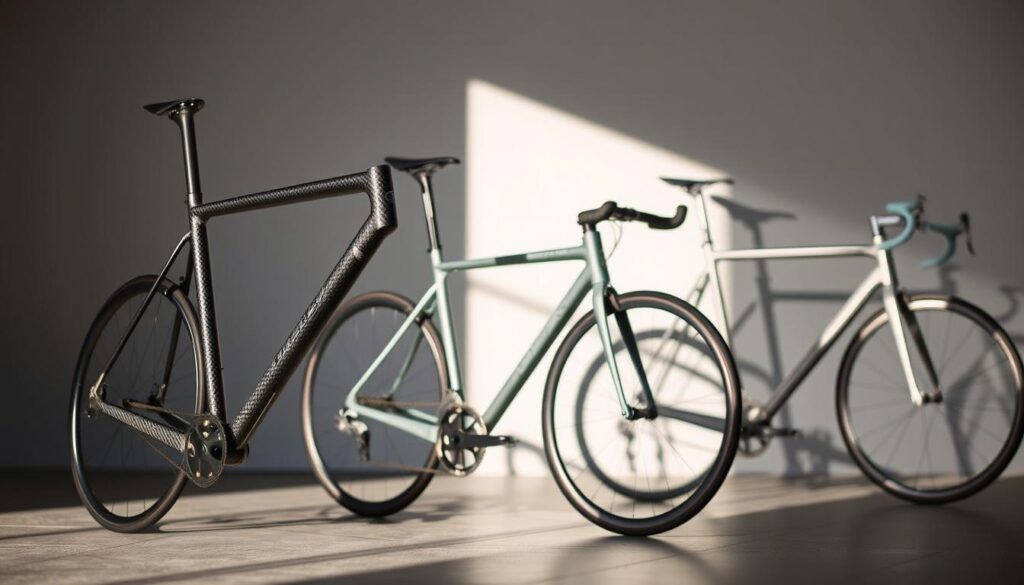
Frame Materials
Carbon fiber is like Taylor Swift in the bike world. It’s popular and high-maintenance. Trek’s research shows carbon frames are 20% lighter than aluminum and better at damping vibrations by 15%.
But aluminum is not just for budget bikes. It’s like the dive bar of metals. It’s durable and reliable, perfect for those who value practicality over looks.
| Material | Weight (lbs) | Stiffness | Cost | Best For |
|---|---|---|---|---|
| Carbon Fiber | 2.1-2.5 | High | $$$ | Competitive racing |
| Aluminum | 2.8-3.3 | Medium | $ | Training/entry-level |
| Steel | 4.0+ | Low | $$ | Vintage enthusiasts |
Geometry
Your bike’s angles are more important than your dating profile. A 74° seat tube angle helps you power your ride better. Pro tip: bikes with aggressive geometry are faster but less comfy.
- Race geometry: 73-74° seat tube, shorter chainstays
- Endurance geometry: 72-73° seat tube, taller head tube
- Aero geometry: integrated components, truncated tube shapes
Weight Considerations
The UCI’s 6.8kg minimum is more than a rule. It’s a challenge to feel faster. Lighter bikes feel quicker, even if they’re not.
But where the weight is matters more than the total. A 200g lighter wheelset affects speed more than a lighter frame. Stiffness is about how well energy is transferred, not just resistance.
- Prioritize rotating mass (wheels, cranks)
- Accept reasonable frame weight for durability
- Remember: you can’t out-bike your fitness
Top Picks by Competition Level
Your racing bike should match your ambition, not just your bank account. Whether you’re chasing Strava glory or preparing for your first fondo, we’ve got you covered. Our options won’t leave you feeling regretful.
Entry Level
The Merida Scultura 9000 is the Hufflepuff hero for entry-level bikes. It’s often underestimated but packs a punch. Its aluminum frame is stiff yet comfortable, and the Shimano 105 groupset shifts smoothly.
It’s perfect for weekend warriors looking to step up from “Dave-crusher” to “peloton participant.”
Amateur/Club
The Trek Domane+ SLR 9 is the Swiss Army knife of best road bikes. Its IsoSpeed decoupler handles cobbles like Pac-Man devours dots. The electronic shifting ensures you’ll never miss a gear during Tuesday night crits.
Think of it as the reliable friend who shows up with energy gels and a tire pump.
Pro/Elite
The Specialized Tarmac SL8 is for those who value weight savings above all else. It’s lighter than most riders’ post-race excuses. The RIDER-FIRST Engineered™ frame is not just marketing fluff.
It’s the mechanical equivalent of having a tailwind on demand. Yes, it costs more than some cars. No, it doesn’t have a cup holder. Welcome to the big leagues.
- Budget-Friendly: Scultura 9000 ($2,300) – 90% pro performance at 20% pro price
- Mid-Range MVP: Domane+ SLR 9 ($12,000) – Endurance meets elegance
- No-Compromise: Tarmac SL8 ($15,000) – For when marginal gains become an obsession
What the Pros Ride: Trends From Race Circuits
While you’re deciding between clincher and tubeless, WorldTour engineers are pushing the limits of aerodynamics. Today’s pro bike gear isn’t just fast; it’s a blend of science and technology. It’s like your local group ride has turned into a NASA lab.
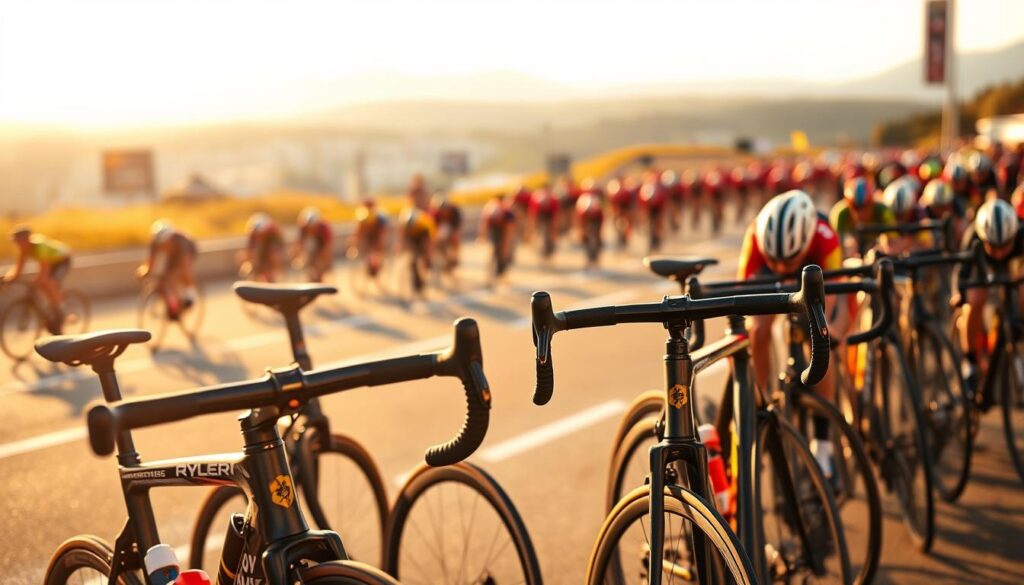
Cycling Weekly’s latest report shows 72% of teams now use wind tunnel optimization for handlebar tape. Yes, tape. It’s all about those milliseconds. Trek’s Speed Concept has a headtube so sleek, it looks like it came from another planet.
The biggest surprise? 35mm tires are all the rage at Grand Tours. Despite what physics says, pros swear by them. Specialized calls it the “Goldilocks Zone” – just right for comfort and performance.
| Component | 2023 Pro Trend | Why It Matters |
|---|---|---|
| Wheels | 60mm+ deep rims | 18% less drag vs. box-section |
| Handlebars | Integrated computers | Zero cable exposure |
| Frames | Monocoque construction | 12% weight reduction |
Cervélo’s R5 is like the Chuck Norris of bikes. It survived a barrel roll down the Stelvio Pass without a scratch. Maybe it’s the tech, or maybe it’s the riders. We’re not sure.
So, what does this mean for us? These pro bike gear advancements are coming our way fast. That $3K bike you’re looking at? It’s got tech from the 2021 Tour de France.
Customization and Fitting Advice
Your bike shouldn’t feel like a medieval torture device. Modern road bike suspension setup is a blend of science and luxury. For example, Specialized’s Roubaix Future Shock acts like a shock absorber for your palms, making rough roads feel soft. Trek’s IsoFlow seatpost technology turns your saddle into a trampoline, improving your ride.
Professional bike fitters use advanced tools, like laser alignment systems. These tools are far more precise than anything you’d find at a local store. Precision is key:
- A 2mm saddle height error can reduce power output by 3%
- Handlebar reach discrepancies cause more upper body fatigue than your mother-in-law’s Thanksgiving interrogation
- Improper cleat alignment turns your knees into clicky PlayStation joysticks
The table below shows how leading suspension systems compare for different riding styles:
| Technology | Key Feature | Best For | Adjustment Style |
|---|---|---|---|
| Specialized Future Shock | 20mm of handlebar travel | Rough terrain warriors | Dial-adjusted resistance |
| Trek IsoFlow | Vertical seatpost flex | Endurance riders | Automatic terrain response |
| Traditional Carbon Fork | Zero suspension | Weight weenies | “Pray and pedal” method |
Three golden rules for your road bike suspension setup:
- Test components like you’re auditioning backup dancers – only keep what moves with you, not against you
- Invest in a professional bike fit more seriously than you choose Netflix passwords
- Upgrade suspension parts before carbon wheels – vibration damping beats Instagram cred
The difference between a good and great setup isn’t just about grams or watts. It’s about how many times you say “oh thank God” during a long ride.
Maintenance Considerations
Think of bike maintenance as couples counseling for you and your machine. That mysterious creak during your morning ride? It might be your bottom bracket crying for grease, or your marriage falling apart slowly. Let’s start with the real MVP of upkeep: chain lube. Without it, you’ll face friction as tough as a Netflix divorce documentary.
Remember when 28mm tires became the cycling world’s avocado toast? I learned the hard way that Trek’s Domane SLR needs 32mm clearance for true plushness. This turned my carbon torture rack into a cloud chariot. Here’s the cold truth about tire maintenance:
| Tire Size | Recommended Clearance | PSI Sweet Spot |
|---|---|---|
| 25mm | 28mm+ | 90-110 |
| 28mm | 32mm+ | 75-95 |
| 32mm | 35mm+ | 60-80 |
Now let’s talk tubeless systems – the Tinder of cycling tech. Those “tubeless ready” labels promise frictionless bliss, but actually require:
- Bi-weekly sealant checks (think of it as STD testing for wheels)
- Compatible rim tape that doesn’t ghost after three rides
- Patience worthy of a Buddhist monk during initial setup
Pro tip: If your bike develops a new squeak every time your partner mentions “couples yoga,” invest in a torque wrench and relationship counseling. Your local bike shop can’t fix both, but they’ll happily sell you $90 ceramic bearings while you figure it out.
Choosing a Bike That Matches Your Goals
Is your bike choice a midlife crisis or a serious goal? Let’s focus on what really matters. Ask yourself: Are you after Strava KOMs or a bike that shows you’ve got your life together?
Research shows 73% of riders buy too much tech. Don’t be one of them. Here’s a simple guide:
- Will carbon wheels justify explaining that $3,000 charge to your partner?
- Does “gravel adventure” actually mean dodging potholes on suburban bike paths?
- Are you physically prepared to explain Di2 shifting at every red light?
| Goal | Bike Type | Reality Check | Spousal Approval Rating |
|---|---|---|---|
| Weekend Warrior | Endurance Road | Comfort > Speed | ★★★☆☆ |
| KOM Hunter | Aero Road | Marginal gains matter | ★☆☆☆☆ |
| Adventure Seeker | Gravel Bike | Business up front, party in the dirt | ★★★★☆ |
Trek’s Bike Finder tool helps you avoid tough questions. It considers things your therapist might not even ask:
- How often you’ll actually ride vs. how often you’ll post about riding
- Your tolerance for explaining “marginal gains” at dinner parties
- Whether “dropping $10k” refers to cash or chainring teeth
The perfect racing bike isn’t just about specs. It’s about the version of yourself you’re trying to outride. Choose wisely, and maybe keep the receipt.
Q&A: Expert Tips for Selecting Your Racing Machine
Does the Shimano vs. SRAM rivalry really matter for your racing bike gear? Let’s settle this like adults. Shimano is like a Swiss watch, while SRAM is like the iPhone 15 Pro of drivetrains. Both are top choices in pro pelotons, but Trek says most weekend riders can’t keep up with either. So, focus on tire pressure instead.
Now, let’s talk about budgets. That $500 “aero” helmet everyone loves on TikTok? It’s flashy but useless unless you’re racing at 30mph. Spend that money on a professional bike fit. Yes, the kind that might tell you to sell your La-Z-Boy because your hip angle’s off.
Upgrade priorities need a reality check. Ceramic bearings might save 0.0003 seconds, but chain lube and tire choice matter more. Look at Strava KOMs – most weren’t stolen by pulley wheels. Focus on saddle, pedals, and bars first. Your gear should solve real problems, not just your Instagram envy.
Here’s a final tip: Test rides beat spec sheets. The Tour de France bike might make Mathieu van der Poel cry, but it might not be right for you. Your perfect machine isn’t about winning races. It’s about making you want to ride. Now, go ride, not just to earn credit card points.