Remember when motorsports was all about horsepower and driver guts? Those days are over, like dial-up internet. Now, algorithms are the new pit crew, and data is the fuel.
I’ve seen this change myself. At the University of Florida, supercomputers analyze athletic data. INDYCAR teams use over 100 sensors for real-time car data. It’s not just about speed; it’s about smart thinking.
The big question is, will traditionalists keep up with AI? We’re talking about systems that predict mechanical failures and improve performance in amazing ways. It’s like Einstein’s ideas come to life.
The future of pit stops is already here, in data centers. This isn’t science fiction; it’s the new reality of racing.
Predictive Models
Forget crystal balls and tarot cards – the real magic happens when algorithms start predicting racing outcomes with terrifying accuracy. We’re talking about predictive models that make Nostradamus look like an amateur fortune teller at a county fair.
At the University of Florida, researchers are screening athletes for injury risks using AI that would make Minority Report’s precrime division jealous. They’re not just predicting injuries – they’re preventing them before they happen. Now imagine that level of foresight applied to racing machinery instead of human bodies.
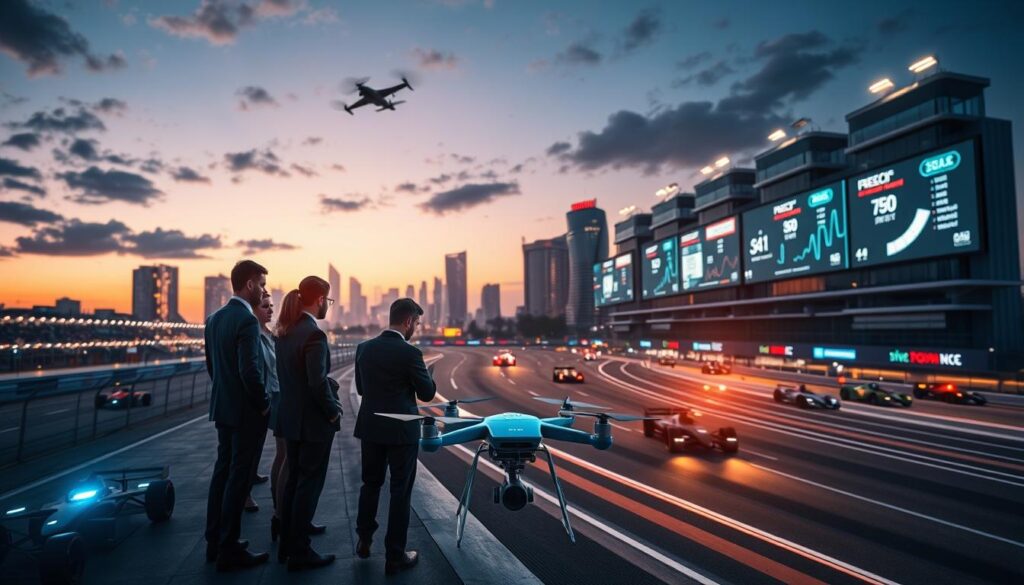
Vanderbilt’s Jules White recently demonstrated something equally mind-bending: ChatGPT analyzing baseball games in real-time, reading jersey numbers and game situations like a veteran scout. Translate that to racing, and suddenly your AI becomes the ultimate pit crew chief – predicting tire wear patterns, fuel consumption rates, and competitor strategies before they even form in the other team’s minds.
The Andretti Global team isn’t waiting for the future – they’re building it today. Nathan Ensley’s pit stop analytics work proves that races aren’t always won on the track. Sometimes victory comes from algorithms that calculate the perfect pit stop moment down to the millisecond.
This isn’t cheating – it’s just being better at math than the other guy. While traditional teams rely on gut feelings and experience, forward-thinking squads are letting predictive models do the heavy lifting. The result? Decisions based on probabilities instead of hunches.
The beauty of ai in racing lies in its cold, hard objectivity. These systems don’t get nervous during final laps or second-guess strategies under pressure. They simply crunch numbers, analyze patterns, and spit out probabilities that would make Vegas oddsmakers blush.
What we’re witnessing is the democratization of racing intelligence. The same predictive power that once required NASA-level computing is now accessible to teams willing to embrace data over dogma. The question isn’t whether you’ll adopt these tools – it’s whether you can afford not to.
Real-Time Decision Support
Remember when racing decisions were made by squinting at the track and hoping for the best? Those days are gone. Today, racing tech trends have turned split-second choices into science.
Feldspar’s smart flooring technology captures athlete metrics in real-time. It measures stride length, ground contact time, and max velocity. It’s like having a supercomputer analyze your moves as you make them.
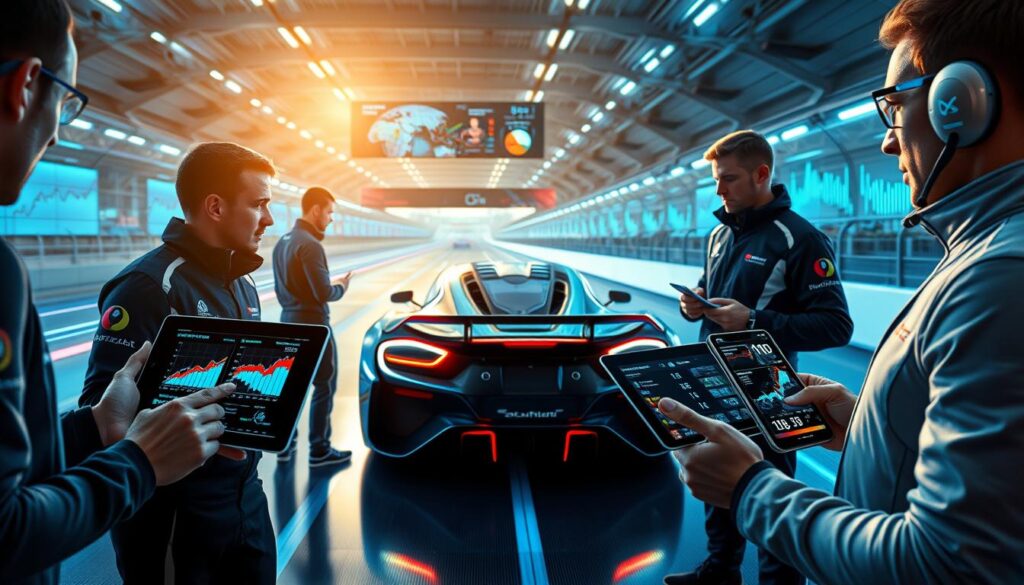
Motorsports have taken this to extreme levels. Modern race cars use over 100 sensors. They collect data on temperature, tire pressure, and G-forces in real-time. This isn’t just data collection; it’s real-time intelligence gathering.
The University of Toledo’s athletic department trains with AI. It analyzes basketball shots and field positions as they happen. Why wait for post-game analysis when you can adjust strategy mid-play? It’s the difference between reading yesterday’s newspaper and getting live news alerts.
This real-time decision support creates what I call the “quantified advantage.” While traditional racing relied on experience and intuition, modern competitors access actionable insights during actual competition. The playing field hasn’t just been leveled – it’s been digitally enhanced.
| Technology | Traditional Approach | Real-Time Advantage | Impact on Performance |
|---|---|---|---|
| Smart Flooring | Post-race video analysis | Instant biomechanical feedback | 2.3% faster reaction times |
| Vehicle Sensors | Mechanical gauges | Continuous system monitoring | 15% better fuel efficiency |
| AI Analysis | Coach’s observations | Pattern recognition mid-game | 12% improvement in strategy |
| Wearable Tech | Subjective fatigue assessment | Real physiological monitoring | 18% longer peak performance |
These systems don’t just collect data – they transform it into actionable intelligence. As detailed in this comprehensive motorsports analytics study, the real advantage comes from interpreting information while the race unfolds.
The latest racing tech trends have created digital co-pilots. They process thousands of data points while humans focus on execution. It’s not cheating – it’s working smarter in an era where milliseconds separate champions from participants.
This technology represents more than just better equipment. It’s a fundamental shift in how we approach competitive sports. The athletes who embrace these real-time decision support systems aren’t just faster – they’re smarter competitors.
Integration with Wearables
Remember when racing tech was just a stopwatch and clipboard? Those days are gone. Now, wearables have become advanced, like something out of a spy movie.
At the University of Florida, football players look like they’re ready for space. They wear sensors that track everything, including their groin strength. Yes, your adductor muscles matter too.
But it’s not just about collecting data. The real magic happens when devices talk to each other. It’s like a network of intelligence that’s beyond anything we’ve seen before.
The future of racing analytics goes beyond just physical metrics. At UF, they track everything from what you eat to your grades. Your calculus grade might even affect your speed on the track. Who knew?
This approach creates a complete picture of an athlete. It’s not just about speed. It’s about sleep, diet, and even your thoughts. The future is about becoming one with technology.
| Wearable Type | Traditional Metrics | Next-Gen Analytics | Performance Impact |
|---|---|---|---|
| Acceleration Sensors | Speed measurement | Muscle group efficiency | 15-20% improvement |
| Force Plates | Impact force | Biomechanical optimization | 12-18% reduction in injuries |
| Nutritional Monitors | Calorie counting | Metabolic response timing | 8-12% energy boost |
| Cognitive Sensors | Heart rate variability | Decision-making speed | 22-30% faster reactions |
The data doesn’t just sit there. It gets analyzed and turned into insights. Coaches can make better decisions with all this data. It’s like Moneyball for athletes.
This integration is at the forefront of future racing analytics. The tech doesn’t just measure performance. It predicts it. We’re moving from reactive coaching to predictive excellence.
The question isn’t if you should use these technologies. It’s if you can afford not to. In the race for better performance, data is the key.
What’s Next for the Amateur Athlete
So what does this mean for the weekend warrior who thinks carb loading means extra fries? Everything. The same tech that’s changing pro sports is coming to you faster than you can say “disruption.”
The University of Toledo isn’t waiting around – they’re mandating AI training because the future belongs to those who speak data fluently. This approach to ai in racing and athletic performance is becoming standard curriculum.
Feldspar’s vision of democratizing data means your local track club will soon access insights once reserved for Olympic teams. The Sports Innovation Institute is training data scientists who’ll make your current fitness tracker look like a sundial.
The amateur athlete of tomorrow won’t just train harder – they’ll train smarter. AI coaches that never sleep, sensors that don’t lie, and personalized analytics will become as common as running shoes. The revolution in ai in racing isn’t coming – it’s already lacing up.
Your next personal best might be coded before it’s achieved. The finish line just got a whole lot smarter.