Remember using a stopwatch and spreadsheet to track lap times? We’ve made huge strides. Now, your smartphone has more racing smarts than systems that cost thousands.
But, is your phone really accurate, or are we just using digital tricks? It’s super convenient – your whole data system fits in your pocket.
That 1Hz GPS receiver might make you question your track records. Apps like Harry’s Laptimer have cool interfaces. TrackAddict lets you try it for free.
This shift in how we access data raises big questions. Are these tools real game-changers, or just feeding our data addiction? We’ll look into mobile versus web applications to find out.
Value of Hardware Loggers
Let’s talk about the real tools that make a difference in racing. Mobile apps are convenient, but hardware loggers give you the exact data needed to shave off seconds from your lap times.
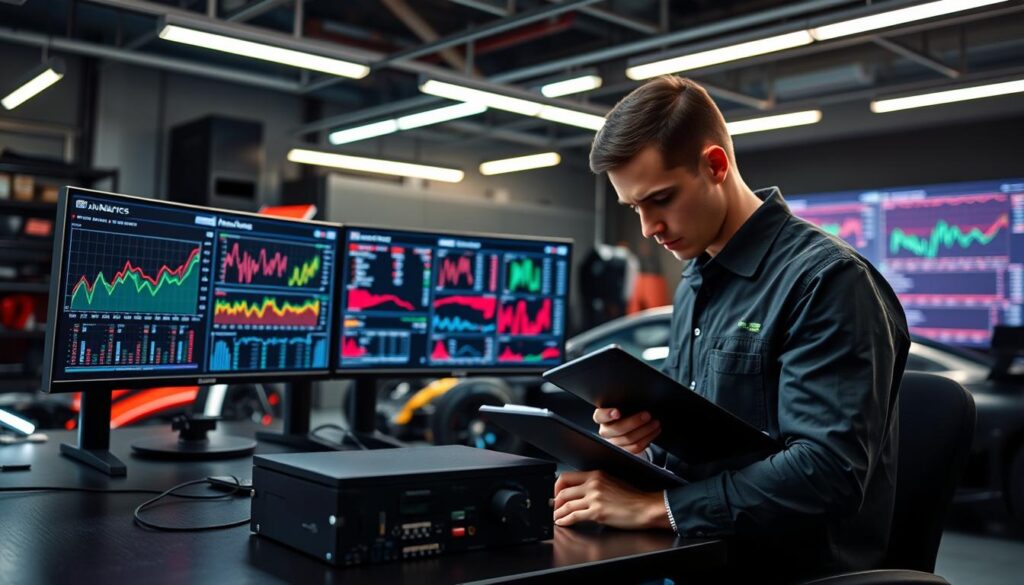
The Aim Solo 2 DL is a step up for serious racers. It costs about $450 and offers 10Hz GPS precision. That’s ten times more than what most smartphones can do.
The VBOX Video HD2 is like having a Formula 1 data system for your track days. It’s priced around $3,000 and combines high-definition video with precise GPS data. This creates synchronized recordings that show exactly what happened and why.
Why do you need such detailed data? It’s because the difference between a good lap and a great one is tiny. Hardware loggers track braking, throttle, and steering with incredible accuracy. They don’t just tell you where you’re slow – they show you why.
| Feature | Aim Solo 2 DL | VBOX Video HD2 |
|---|---|---|
| GPS Sampling Rate | 10Hz | 20Hz |
| Video Integration | No | HD Video Sync |
| Price Point | $450 | $2,900 |
| Best For | Club Racing | Professional Teams |
| Data Accuracy | Professional Grade | Laboratory Grade |
Professional racing teams use this equipment because every millisecond counts. The data is clear, accurate, and doesn’t get lost like phone signals can.
When you need data that stands up to professional scrutiny, hardware loggers are the answer. They turn feelings into facts that can be analyzed and improved upon.
Mobile apps might say you’re slow in corner three. But hardware systems show you exactly how much brake pressure you used, your steering angle, and where you could have gone faster. That’s the kind of data that wins championships.
Budget Considerations
Let’s talk about the financial reality of racing analytics. The choice between mobile apps and hardware systems isn’t just about performance. It’s also about what your wallet can stomach.
Mobile racing apps offer a “gateway drug” approach to performance tracking. TrackAddict’s free version gives you surprisingly capable analytics without spending a dime. Harry’s LapTimer Grand Prix edition costs $27.99 – about what you’d pay for a decent steak dinner.
Hardware systems operate in a completely different financial universe. The Aim Solo 2 DL will set you back roughly $450, while professional-grade VBOX systems can reach $3,000. That’s not just tire money – that’s “explain this purchase to your spouse” territory.
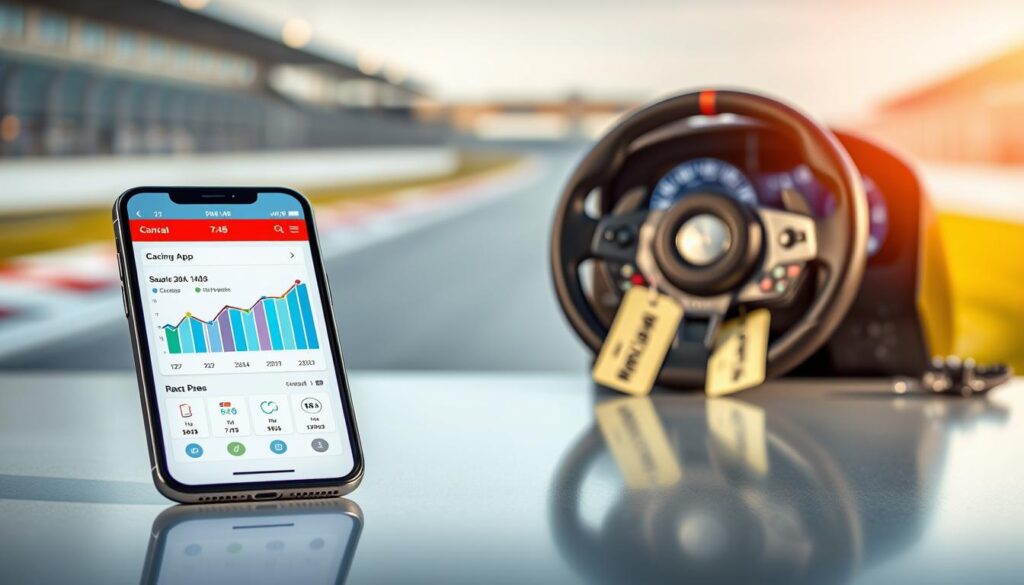
But here’s where the real racing analytics comparison gets interesting. The sticker price is just the beginning. Mobile apps often require additional investments:
- Bluetooth GPS receivers ($100-200) for actual accuracy
- Professional mounts that won’t launch your phone at 1.2G
- Subscription fees for premium features
Hardware systems typically include everything you need in one package. No hidden costs, no surprise accessories. Just plug-and-play professionalism.
The true cost analysis reveals two different philosophies. Mobile apps let you enter the game cheaply but charge you competence fees along the way. Hardware systems demand serious upfront investment but deliver complete solutions.
| Cost Factor | Mobile Apps | Hardware Systems |
|---|---|---|
| Entry Price | $0 – $27.99 | $450 – $3,000 |
| Required Accessories | $100 – $300 | Included |
| Total Year 1 Cost | $100 – $330 | $450 – $3,000 |
| Upgrade Path | Frequent app updates | Hardware replacement |
Your budget decision ultimately reflects your racing commitment level. Are you testing the waters or diving in headfirst? The mobile racing app vs hardware debate isn’t about which is better. It’s about which is better for your bank account and ambitions.
Remember: The cheapest option isn’t always the most economical. Sometimes paying more upfront saves you from the upgrade treadmill later. Choose wisely, race smartly.
Data Detail and Accuracy
Imagine watching Top Gun: Maverick at different speeds. That’s like comparing your phone’s GPS to racing gear. Both track lap times, but the details matter a lot.
Your phone’s GPS updates once a second. At racing speeds, that’s like using a flipbook for braking points. Dedicated gear with 10Hz GPS captures every detail.
The mobile racing app vs hardware debate is interesting. Modern phones can use external GPS, making them useful. But they have limits.
OBD integration changes the game. Mobile apps offer basic engine data, but hardware gives surgical-level diagnostics. You get to see cylinder temperatures, fuel trim, and more.
Here are key differences:
- GPS sampling rates (1Hz vs 10Hz+)
- OBD-II parameter depth and refresh rates
- Data filtering and smoothing algorithms
- Sensor fusion capabilities
- Export formats for professional analysis
It’s not just about numbers. It’s about trustworthy data for discussions with your engineer. The right data shows where you can improve.
Accuracy in racing analytics is essential. It’s the difference between thinking you’re getting better and actually seeing it. In motorsports, every millisecond counts.
Real-World Scenarios
Imagine you’re at a track day, feeling like a modern-day Senna. But then, an organizer sees your phone on the dash. You’re kicked out while the guy with Aim Solo DL keeps improving.
Most tracks don’t allow visible timers. Your choice between a mobile racing app and hardware is now a big deal.
For pros, the choice is clear. Your career depends on thousandths of a second. You need brake and throttle data that apps can’t provide. It’s not about showing off, but about reliable data for your career.
The casual driver just wants to see if they’re getting better. Serious amateurs aim for competition with precise metrics. Your needs grow, and so should your tools.
Knowing when to upgrade is key. You might not need data that splits atoms. But, choosing the right tool is all about your goals and budget.
In the end, the best system is what helps you go faster. Whether it’s a mobile app or hardware, it depends on your goals and budget.